Terai habitats
Explore the relationship between sal forest, wet grassland and wildlife.
Uttar Pradesh · National park within the Dudhwa landscape
Sal forest, wet grasslands and the Terai’s quieter wildlife country.
North India · National park within the Dudhwa landscape
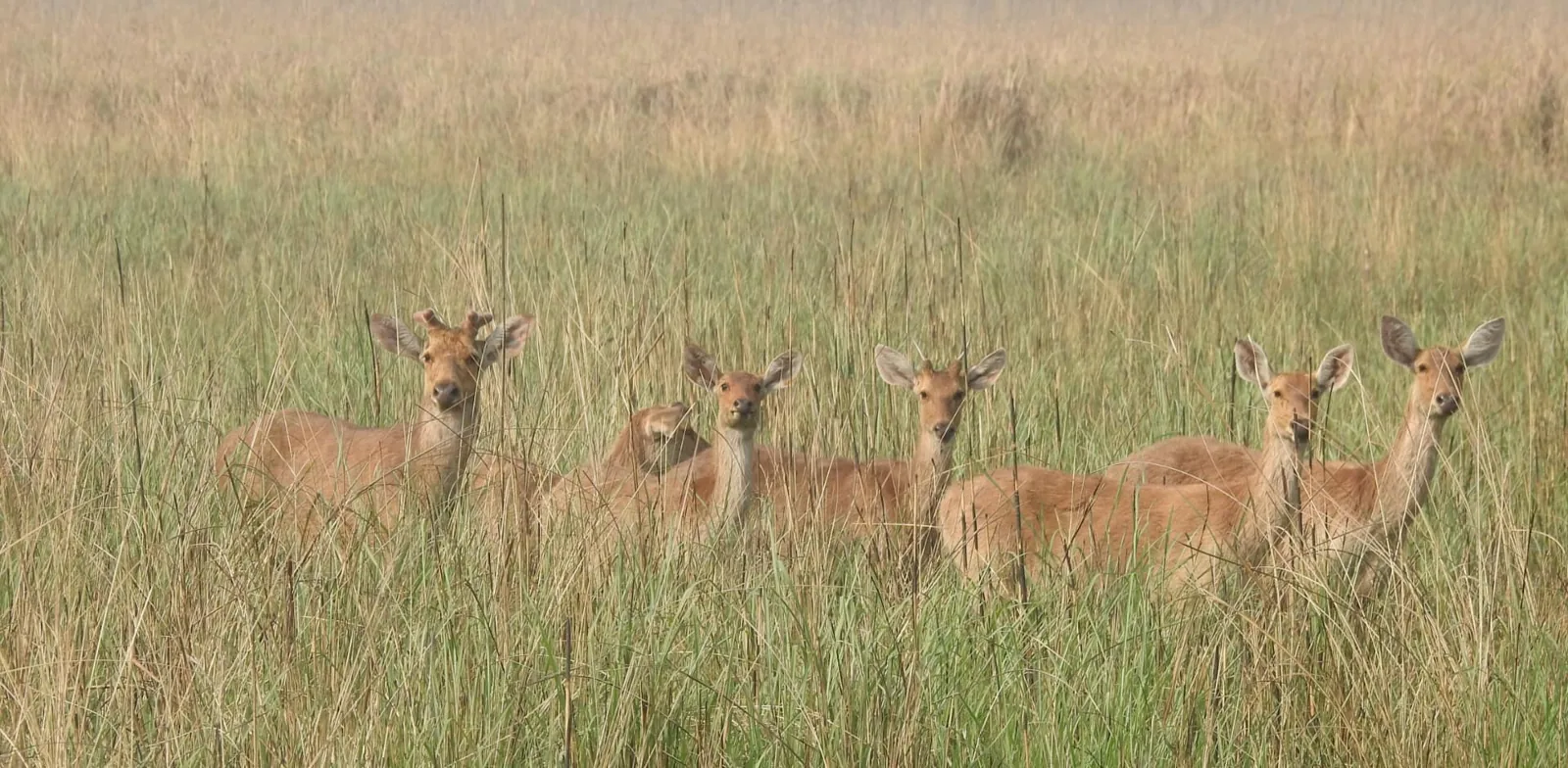
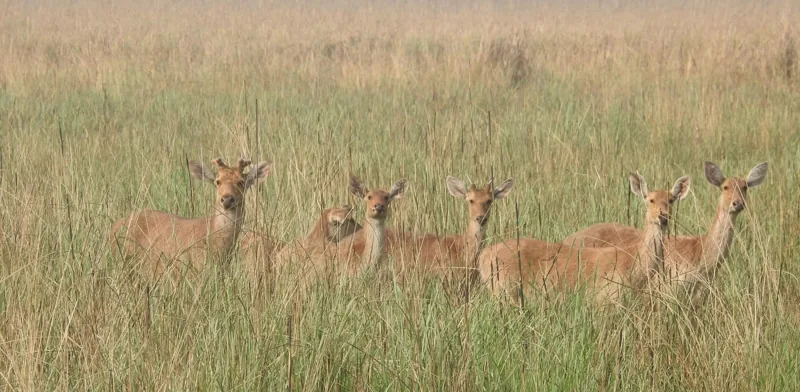
Dudhwa belongs to the Terai landscape near India’s border with Nepal. Sal forest, grassland and wetlands create varied conditions for wildlife, with swamp deer and birds among the interests alongside tiger country. The visit is often most rewarding for travellers who enjoy habitat observation as much as a search for a single animal.
The wider Dudhwa conservation landscape includes other protected areas whose visitor arrangements are distinct. Do not treat Kishanpur or Katarniaghat as simply additional Dudhwa gates. If the journey includes them, give each its own travel time and activity plan.
Explore the relationship between sal forest, wet grassland and wildlife.
Give the wetland and grassland interests time within the safari plan.
Add another Terai protected area only when its separate logistics are accounted for.
Cooler dry-season months are a useful starting point. Seasonal weather, road conditions and current forest access determine which outings can operate.
Lucknow is a practical regional hub for many itineraries, followed by a road journey into the Terai. Plan an arrival day with sufficient margin before the first forest outing.
Lucknow is a practical regional hub for many itineraries, followed by a road journey into the Terai. Plan an arrival day with sufficient margin before the first forest outing.
Share your dates, party size, wildlife interests and accommodation preferences. The final proposal identifies the reporting point, safari format, transfers and what is included.
Stay near the specific area included in the itinerary. More remote stays may have simpler facilities, so confirm room access, power, meals and comfort expectations in advance.
Named properties, room categories, meal plans and availability are set out in your individual proposal. Tell us if step-free access, family rooms, a private vehicle or a quieter pace will help you enjoy the visit.
Follow the guide and park staff, keep the required distance from wildlife, avoid feeding or calling animals, and stay within authorised routes. Community visits require local consent.
Wildlife moves freely. Patient observation, appropriate distances and time in suitable habitat matter more than a promised sighting.
No. Dudhwa is in Uttar Pradesh. Tadoba–Andhari, whose old page carried a Dudhwa title, is a separate Maharashtra destination.
No. They are distinct protected areas within a wider conservation landscape and need separate planning.
Yes, on a longer route with its own transfers and authorised activities; it is not an interchangeable Dudhwa gate.
Sal woodland, wet grassland and marshy habitats provide a different wildlife setting from drier Central India forests.
No. Rhino-related access is specific and must be checked; a general park visit does not guarantee an encounter.
It can be, with a proper road-transfer day and connections suited to your route.
Match the base to the actual protected area and confirm facilities, meal plans and early-start arrangements.
Yes. Terai habitats add birding value to the visit, especially when time is reserved for observation.
Three nights is a reasonable starting point for Dudhwa itself; add nights for separate Terai destinations.
No. Vegetation and animal movements change, and every drive requires realistic expectations.
Guide reviewed 18 November 2026. Permit, access, activity and accommodation arrangements are checked again for your dates before a booking is confirmed.